
How niche marketing, fan loyalty, and eSIM commoditisation are reshaping the MVNO market
Something interesting happened in Belgium last week. Wout van Aert — winner of Paris-Roubaix, one of the most recognisable names in professional cycling — launched his own mobile offer. Not as a brand ambassador. As an operator.
WvA Mobile runs on Telenet‘s network and offers two plans: a 20 GB formula at €13/month, with a 2 GB data bonus every time van Aert wins a race, and an unlimited plan at €35 that includes exclusive behind-the-scenes content and virtual cycling experiences on platforms like Zwift or Rouvy.
The pricing is competitive, but price is not the story. Van Aert himself made this clear in an interview with Het Nieuwsblad:
“At first I thought: who’s actually interested in a network where you simply see my name on the screen of your phone? But they pitched it well: the goal is to create a community.”
Wout Van Aert
That sentence deserves attention. Because it captures something that is fundamentally changing the MVNO market — and the way brands think about mobile connectivity.
The SIM card as a loyalty instrument
For most of the past two decades, mobile subscriptions were sold like utilities. The differentiator was price, coverage, or data allowance. The relationship between operator and subscriber was essentially transactional.
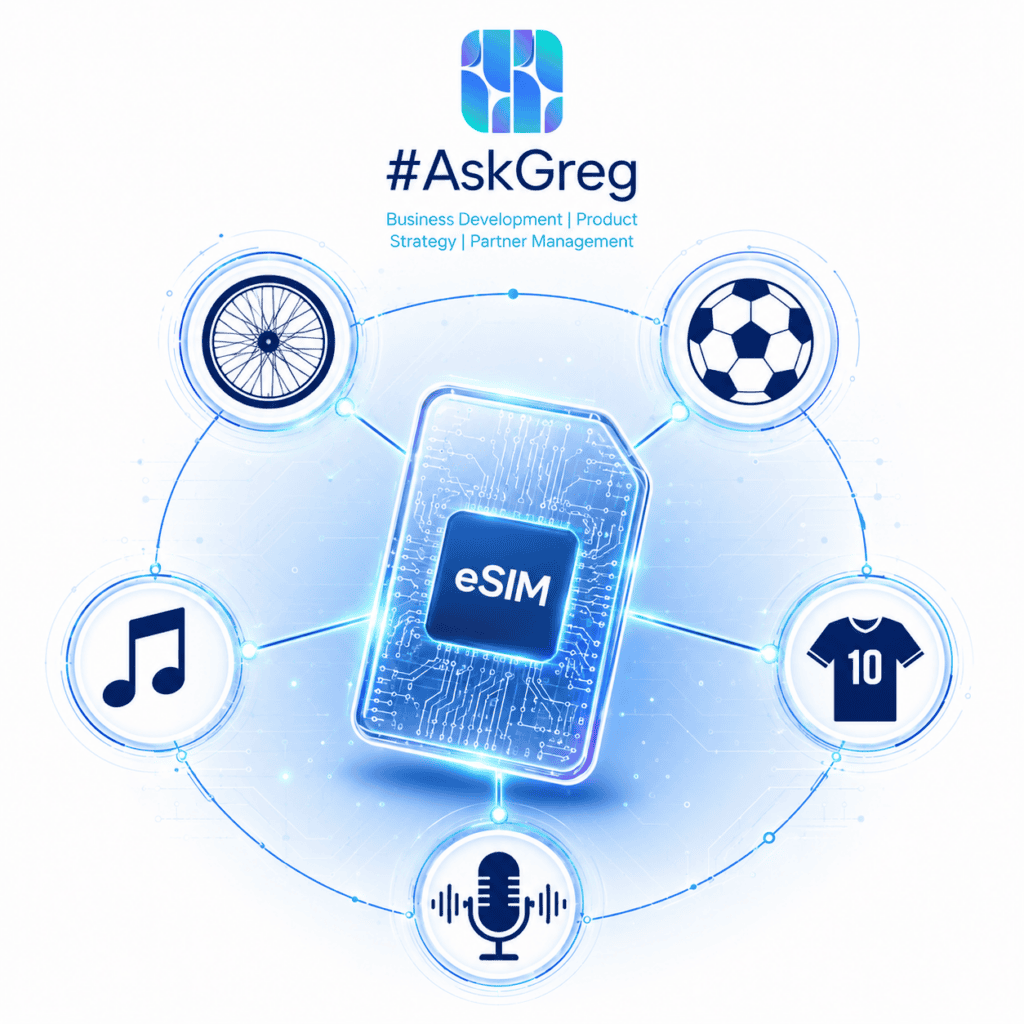
What a new generation of community MVNOs is doing is different. They are using the mobile subscription not as the product, but as the access layer to something else — a shared identity, an experience, a community that subscribers want to be part of.
This is not a marginal phenomenon. Football clubs in Brazil have been running their own MVNOs since 2019, starting with Cruzeiro Celular, quickly followed by Fluminense, Gremio, Bahia, and Vasco da Gama. The logic there is direct: football fans already communicate intensely around the sport. An MVNO plugs into that existing behaviour rather than trying to create a new one.
In Italy, AC Milan launched Connect4 — plans named after iconic chapters in the club’s history, integrated into their broader digital fan ecosystem. In Spain, Real Betis Balompié launched its MVNO as early as 2017, in partnership with Más Móvil.
In the US, Ryan Reynolds’ minority stake in Mint Mobile turned into a $1.35 billion T-Mobile acquisition. The SmartLess podcast trio launched their own MVNO built around their audience. Roccstar Wireless built its offer around music artists and their fan communities. And beyond the celebrities, GSMA Intelligence counts around 2,138 MVNOs globally — a growing share of which are affinity or community-based.
The pattern is consistent across markets and verticals: the subscription is the membership. The connectivity is the commodity.
eSIM made this possible at scale
What has changed structurally is the cost and complexity of launching a mobile offer.
Cloud-native core networks, eSIM provisioning, and MVNE platforms have compressed what used to require 12–18 months and significant capital into a matter of weeks. The technical barrier to becoming an MVNO — or to white-labelling one — has largely disappeared.
This matters because it decouples the connectivity layer from the brand layer. A cycling brand, a podcast, a professional association, a regional retailer, or an ethnic community organisation can now put its name on a mobile offer without building or owning any network infrastructure. The eSIM removes the last physical friction: no SIM card to distribute, no retail presence required, instant provisioning from an app.
In this environment, mobile connectivity has effectively become a commoditised loyalty tool. The question is no longer can we launch a mobile offer? It is does our community have enough coherence and trust to make one meaningful?
The economics are more compelling than they look
Community MVNOs benefit from a structural advantage that traditional operators cannot easily replicate.
When the audience already exists and already trusts the brand, customer acquisition costs drop dramatically. Research suggests influencer or community-led MVNOs can achieve acquisition costs up to 70% lower than traditional carriers. That changes the unit economics significantly — lower ARPU models become sustainable when you are not spending heavily to acquire each subscriber.
Churn also behaves differently. A subscriber who chose WvA Mobile because they are a van Aert fan is not going to leave for a competitor offering €1/month less. The switching cost is not financial — it is relational. That is a fundamentally different retention dynamic than the one facing a generalist discount MVNO.
Lebara built an entire European business on exactly this principle — serving international communities with multilingual support and low-cost international calling. The community was the product; connectivity was the vehicle. Lebara grew revenue 5x between 2022 and 2024 through smart repositioning around this same logic.
What this means for MVNO strategy
At MVNO World Amsterdam 2026, the message from operators and experts was consistent: the MVNO market is not contracting — it is bifurcating. Generalist operators competing on price against mobile network operators are under serious pressure. Operators with a genuine niche — a community, a sector, a clearly identified user need — continue to grow.
WvA Mobile is the consumer-facing illustration of this. But the same logic applies across B2B and vertical markets. Enterprise-focused MVNOs, ethnic community operators, student-oriented brands, professional sector operators: the models that have proven durable all share one characteristic. They give subscribers a reason to stay that has nothing to do with the monthly price.
The early generation of MVNOs — discount brands entering markets with a cheaper version of what the incumbent already offered — demonstrated that price alone is not a sustainable differentiator. The community MVNO generation is demonstrating something more durable: shared identity creates stickiness that price can never buy
The practical implication
For any organisation considering a mobile offer — whether as a standalone MVNO, a white-label product, or a connectivity bundle — the strategic question is not technical. It is not about network selection, wholesale pricing, or regulatory compliance, even though all of those need to be solved correctly.
The real question is: does your audience have a reason to care about your name on their phone?
If yes — and if the content, experience, or benefit layer is genuinely good, as van Aert himself insists it must be — the mobile subscription stops being a cost line in a competitive market and becomes an asset in a loyalty programme.
That is a different business. And it requires thinking about mobile strategy differently from the start.
Comments are closed